

Quick answer
Saddle pain caused by a cyclist's nodule, also known as the third testicle, develops because a saddle doesn't match the distance between your sit bones. Which saddle helps isn't something you decide by feel or brand, but with a saddle pressure measurement that shows where the pressure is actually coming from and how to reduce it.
In short
- A cyclist's nodule or third testicle is a thickening of tissue between the sit bones caused by years of pressure and friction from an ill-fitting saddle.
- The correct saddle width and shape are determined with a saddle pressure measurement, not by feel or brand name.
- Reach, stack and frame size together with the saddle influence how much pressure ends up on the perineum.
- If you experience persistent pain, swelling or fever, consult a doctor; a bike fit is complementary to posture and equipment.
- For complaints such as a cyclist's nodule, an Elite bike fit with saddle pressure measurement is often a more logical choice than a Standard bike fit.
What is a cyclist's nodule or third testicle?
A cyclist's nodule, also called the third testicle among road cyclists, is a thickening of skin and subcutaneous tissue. The lump is usually located between the genitals and the anus, often right at the spot of a sit bone. The name refers to the shape and location of the swelling, not to a medical diagnosis.
The term came about because the lump resembles a third testicle in shape and position, although in reality it's thickened tissue caused by mechanical loading. Repeated pressure and friction while cycling gradually thicken the tissue at that one spot. At first, you mainly feel an odd, uncomfortable pressure while riding.
Over time, that pressure can develop into a painful swelling that makes cycling difficult. Many riders only really notice the complaint after cycling with it for months or even years, without linking it to their saddle or position. You'll find more information on related complaints in the overview of complaints and in the bike fitting glossary A-Z.
How does saddle pain at the sit bones develop?
Saddle pain at the sit bones usually develops from a combination of a saddle that doesn't match your anatomy and a riding position that increases pressure on the perineum. Enduring the same pressure on the same spot year after year gradually builds up the complaint until it becomes noticeable, and eventually painful.
By a "wrong saddle", we don't necessarily mean a cheap saddle, but a saddle whose width and shape don't match the distance between your sit bones. A saddle that's too wide or too narrow shifts the pressure onto soft tissue, whereas the sit bones are specifically built to absorb that pressure.
Your riding position also plays a major role. Too long a reach, for example, forces you to sit further forward, tilting the pelvis and shifting pressure towards the perineum rather than the sit bones. This combination of saddle and position continues for years, until the tissue adapts and a nodule forms.
You can't trace this build-up back to a single factor: the saddle, saddle height, reach and saddle nose angle all interact. You can read more about this complaint and how it develops on saddle pain.
Which saddle helps with a cyclist's nodule or third testicle?
The right saddle for a cyclist's nodule or third testicle is one whose width and shape match the distance between your sit bones, determined through a saddle pressure measurement. It's not the brand or price of a saddle that determines whether it fits, but how the pressure is distributed across your sit area while cycling.
Saddle width is measured during the bike fit, usually with a pressure mapping mat that shows exactly where your sit bones land. Based on that, you choose a saddle wide enough to support those bones, without the sides cutting into the thighs or soft tissue.
A gebioMized saddle pressure measurement goes a step further: it not only shows where the pressure is highest, but also how that pressure shifts when you sit upright, drop into an aero position or briefly come out of the saddle.
During an Elite bike fit, several saddles are actually tested and compared based on that measurement, rather than you choosing a saddle by feel or brand name. This way, you can see concretely which saddle keeps the pressure in the right place. You'll find more information on this complaint and how to approach it on saddle pain.

How does Bike Metrics approach a cyclist's nodule during a bike fit?
At Bike Metrics in Zoutleeuw, the approach to a cyclist's nodule starts with listening to the rider and looking at the current bike, saddle and position. Only after that comes a targeted saddle pressure measurement and position adjustment on the fit bike, without pushing unnecessary purchases. This is how Dimitri found a pain-free solution for a rider who had suffered from saddle pain for years.
A client came to Bike Metrics with a cyclist's nodule, a lump that develops from years of pressure and friction between a sit bone and the saddle. He had been cycling for years with a saddle and position that didn't suit his anatomy, and the pain had meanwhile increased considerably.
The approach didn't start with ordering a new saddle, but with looking at what could be changed on the existing bike and with the current equipment. Dimitri doesn't push for purchases that aren't necessary: first, he maps out what the position and saddle are doing to the body.
On the fit bike, Dimitri opted for a shorter reach with a higher stack. That meant a stem of 80 mm with a +15 degree angle, combined with a frame size of L/56, which was noticeably short for this rider's height. As a saddle, a gebioMized Valid, 150 mm wide, emerged as the best match.
The saddle pressure measurement and testing different saddles and positions on the fit bike gradually revealed the pain-free position. That position was then transferred in detail to his own road bike, so he could continue cycling at home with the same settings. You can read how such a process, from frame size determination on the fit bike to the final fit, works in practice in this example of frame size determination on the fit bike leading to the final bike fit.

Which adjustments to your riding position reduce pressure on the perineum?
Pressure on the perineum drops mainly with a more upright posture: a shorter reach combined with a higher stack shifts your body weight away from the front of the saddle towards your sit bones and hands. That's exactly the direction Bike Metrics worked in with the rider who had a saddle sore, testing reach and stack step by step on the fit bike.
The length and angle of the stem largely determine how reach and stack turn out, without necessarily needing a new frame straight away. A shorter stem with an upward angle brings the handlebars closer and higher, which keeps the torso more upright and reduces pressure on the perineum.
Ultimately, the frame size sets the limits of what's still achievable with stem and saddle position. A frame that's too large or too small for the rider limits the scope to adjust reach and stack, however you play around with stem or saddle. You'll find more on frame size and geometry on the page about determining frame size and geometry for a new bike and in the article Road bike frame size: 54, 56 or 58 cm explained.
When should you see a doctor about saddle pain?
See a doctor or physiotherapist about saddle pain if the pain persists, if swelling or redness appears, or if fever develops. These are signs that there's more going on than a saddle or position that simply isn't optimal, and medical advice is the right first step at that point.
A bike fit at Bike Metrics adjusts the saddle and riding position based on anatomy and saddle pressure measurement, but it isn't a medical treatment for the saddle sore itself. Dimitri looks at what the bike does to the body, not at what's happening beneath the skin.
In practice, medical follow-up and an adjusted riding position usually work alongside each other, rather than as alternatives. A doctor treats the tissue, while the bike fit removes the cause on the bike so the pressure doesn't build up again. An overview of complaints linked to riding position, such as saddle pain, knee pain or back pain, can be found on the page with an overview of cycling complaints.
Which bike fit suits saddle pain and a saddle sore?
For saddle pain and a saddle sore, a bike fit with saddle pressure measurement is usually the most logical choice. A Standard bike fit checks your basic set-up and posture, but doesn't measure the pressure on your sit bones. For a pressure-sensitive complaint such as a saddle sore, an Elite bike fit with saddle pressure measurement and 3D motion analysis (3DMA) gives you far more targeted insight into what your saddle and position are doing to your body.
With recurring saddle pain, a pressure point or a saddle sore, that basic set-up is often not enough, because you need to know exactly where and how much pressure is on your sit bones and perineum.
Every bike fit at Bike Metrics in Zoutleeuw starts not with a fixed protocol, but by listening to what you feel on the bike. Dimitri starts from your complaint and your current equipment, and only then looks at which adjustments to saddle, stem or position are needed. You'll find more on saddle pain as a complaint on the page about saddle pain.
Still not sure which package suits your situation? On the overview of all bike fit packages, duration and price are set out clearly side by side, so you can compare before booking. Booking itself is easy to do online, without any extra steps.
Frequently asked questions
What's the difference between a cyclist's nodule and a regular saddle sore?
A saddle sore is usually superficial irritation or chafing caused by friction, which clears up after a few days' rest. A cyclist's nodule is a thickening of the tissue beneath the skin that can build up over years due to sustained pressure on the same spot, and it won't disappear after just one day off the bike.
Will choosing a different saddle make a cyclist's nodule go away?
A better-matched saddle and an adjusted riding position can reduce pressure on the tissue, which may ease discomfort while cycling. For treatment of the nodule itself, consult a doctor or physiotherapist; a bike fit focuses on your position and equipment.
How do I know what saddle width I need?
The right saddle width depends on the distance between your sit bones. During a bike fit, that distance is measured and combined with a saddle pressure measurement, so you're not choosing a saddle on feel alone.
Is a more expensive saddle always better for saddle pain?
No. An expensive saddle that doesn't match your sit bone width and riding position can cause just as many problems as a cheaper model. Price says little about whether a saddle suits your anatomy; that only becomes clear after a saddle pressure measurement or a thorough test.
How long does a bike fit focused on saddle pain take?
That depends on the package you choose. A Standard bike fit takes 1.5 to 2 hours, while a Master bike fit with saddle pressure measurement and 3D motion analysis (3DMA) takes 3 to 3.5 hours. For persistent issues, the more extensive package is often more worthwhile.
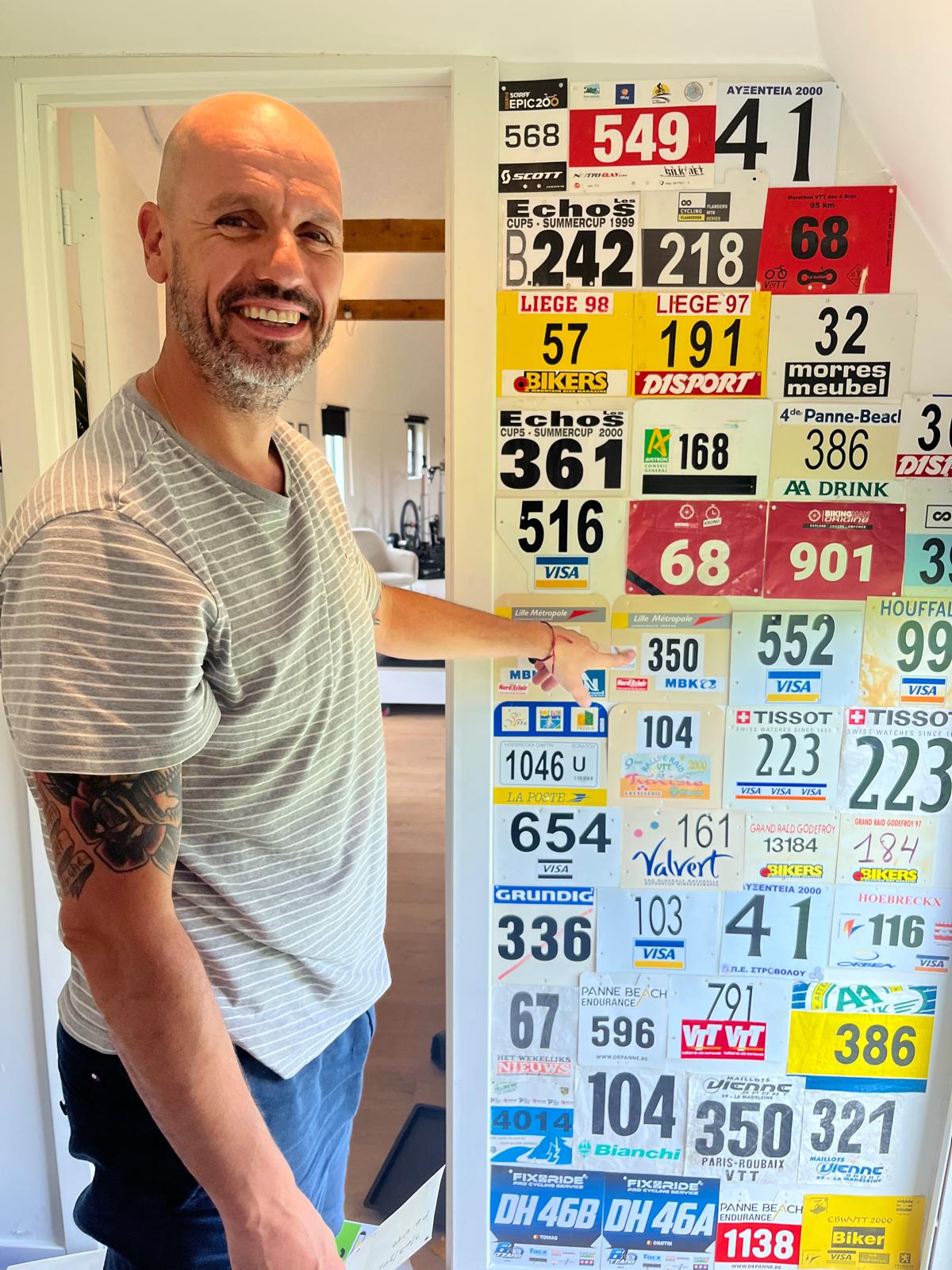
Dimitri Hoebreckx
IBFI-certified bike fitter and founder of Bike Metrics in Zoutleeuw, Belgium. More than 30 years of cycling experience.
More about Dimitri
